
Chronic Subdural Hematoma (CSDH) is a common neurosurgical condition in which blood slowly collects between the brain and its outer covering (dura), often weeks after a minor head injury. It is frequently seen in elderly patients, individuals on blood thinners, or those with a history of trivial trauma that may even be forgotten.
Early recognition and timely treatment are essential because this condition, though serious, is highly treatable with excellent outcomes when managed properly.
What are the Symptoms of Chronic Subdural Hematoma?
The symptoms of CSDH usually develop gradually and may be subtle in the beginning. Common signs include:
•Persistent or worsening headache
•Weakness in the arms or legs
•Difficulty walking or imbalance
•Memory disturbances or confusion
•Slurred speech
•Drowsiness or reduced consciousness
•Seizures in some cases
Because symptoms progress slowly, many patients delay consultation, which can worsen the condition.
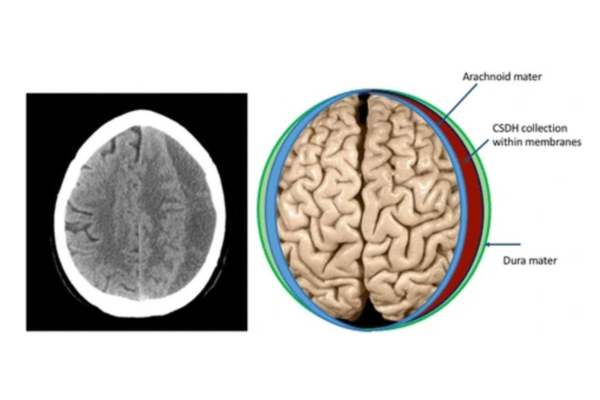
Diagnosis of Chronic Subdural Hematoma
Diagnosis is straightforward with imaging:
•CT Scan Brain – most commonly used and quickly identifies the hematoma
•MRI Brain – used in selected or complex cases
Early imaging helps in deciding whether the patient requires observation or immediate surgery.
Treatment Options for Chronic Subdural Hematoma
Treatment depends on the size of the hematoma and the patient’s symptoms.
1. Conservative (Non-Surgical) Management
Small hematomas without significant symptoms may be managed without surgery. This includes close monitoring, repeat scans, and adjustment of medications such as blood thinners. Many of these cases resolve gradually.
2. Minimally Invasive Surgery (Gold Standard)
For symptomatic or large hematomas, burr hole drainage is the most effective and commonly performed procedure.
A small opening is made in the skull, and the collected blood is drained using a tube. This technique is safe, quick, and associated with rapid recovery.
In selected patients, twist drill procedures may also be performed, which are even less invasive.
3. Craniotomy (For Complex Cases)
In rare situations where the hematoma is thick, recurrent, or organized, a larger surgery called craniotomy may be required. This is reserved for advanced or complicated cases.
Recovery and Post-Treatment Care
Most patients show significant improvement within days after surgery. Post-treatment care includes:
•Short ICU monitoring
•Drain management to prevent recurrence
•Physiotherapy for neurological recovery
•Follow-up CT scans
With proper care, the majority of patients return to normal life.
Why Choose Dr. Atmaranjan Dash for Treatment?
•AIIMS New Delhi–trained neurosurgeon
•Expertise in minimally invasive brain surgery
•Extensive experience in treating chronic subdural hematoma cases
•Focus on safe surgery, faster recovery, and reduced complications
•Advanced treatment available at CARE Hospitals

Chronic Subdural Hematoma Treatment in Odisha
Bhubaneswar has emerged as a leading center for neurosurgery in Eastern India, offering:
•Advanced CT and MRI imaging
•24×7 emergency neurosurgical services
•Dedicated Neuro ICU care
•Modern minimally invasive surgical techniques
Patients from across Odisha and neighboring states seek treatment here for reliable and high-quality care.